
Introduction: Obesity is a chronic multifactorial disease characterized by excessive accumulation of body fat at levels harmful to health. WHO points obesity as one of the greatest public health problems in the world, its etiology is complex and results from the interaction of genes, lifestyles, psychosocial, metabolic, endocrine, behavioral and environmental factors. Diabetes, cardiovascular diseases, arterial hypertension, cerebrovascular accidents, some cancers, osteoarticular, dermatological, respiratory, hepatic, renal problems are some of the comorbidities due to obesity. The pathophysiology of obesity, characterized by excess fat in the abdominal region, impairs the action of insulin besides increasing the hepatic production of glucose. Obesity patients commonly develop insulin resistance and hyperglycemia. The treatment of obesity should be initiated with clinical measures such as diet, psychotherapy, medications and physical exercises, being followed by a multidisciplinary team for at least two years. When occur therapeutic failure, there is the option of surgical treatment. Gastric bypass is the most practiced bariatric technique in Brazil, corresponding to 75% of surgeries performed, due to its safety and, mainly, its effectiveness. The surgery leads to long-term weight loss (40% to 45% of the initial weight) and control of the main diseases associated with obesity.
Objective: Evaluate the effect of weight reduction on the glycemic profile of patients with obesity in the postoperative period of gastric bypass.
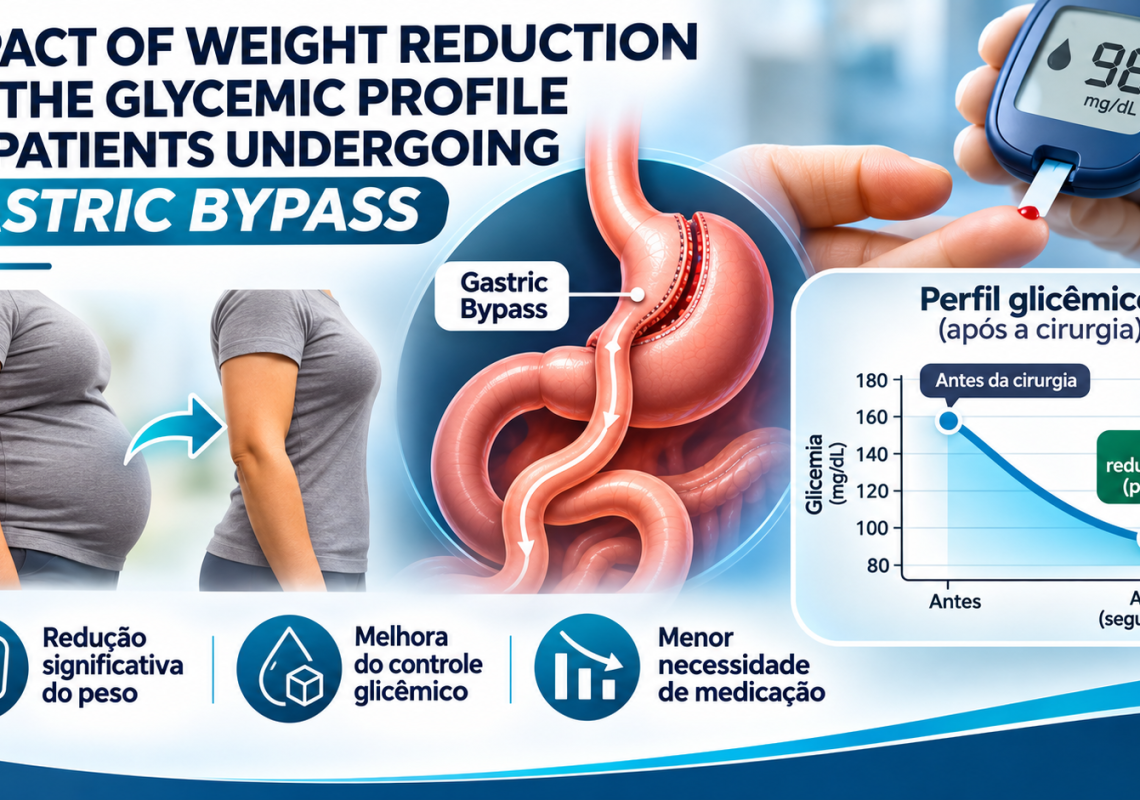
Methods: Cross-sectional study with partial results performed with 28 obese patients submitted to gastric bypass in southern Brazil. Demographic data and glycemic profile were obtained in the pre and postoperative period of 60 days of bariatric surgery. Results: The mean age of participants was 41.56 years (± 10.90), height 151.67cm (± 25.82), 78.6% were women and 21.4% were men. The mean weight was 129.29 kg (± 26.55) in the preoperative period, and 83.04 kg (± 14.68) in the postoperative period of 60 days. In relation to glycated hemoglobin and fasting glycemia, there was an average reduction from 5.76 (± 0.86) to 5.07 (± 0.86), and 102.71mg / dl (± 24.40) to 81, 79mg / dl (± 9.72) respectively in the postoperative period. There was a significant weight reduction, BMI, glycated hemoglobin and fasting glycemia after bariatric surgery (P o0.001).
Conclusion: Weight reduction through gastric bypass in the postoperative period of 60 days showed a significant effect on the improvement of the glycemic profile of obese patients, reducing the risk of comorbidities.